


What Companion Trees May Be Doing Beneath the Soil

In the last post, I explored how companion trees helped create better growing conditions above ground by providing shade, shelter from wind, protection from frost, and a more layered environment for our food garden.
This time, I'd like to look beneath the surface.
Not because I can see exactly what is happening there, but because the extraordinary growth above ground naturally makes me wonder what might be happening below our feet. At just 2.5 years into this journey, many of these processes are probably only beginning.
Some of what follows comes from direct observation. Some comes from understanding how healthy trees and healthy soils work together. I'll leave it to time to reveal just how much of it we eventually see.
Fast Growth That Stores Carbon
One of the reasons we chose Eucalyptus grandis as a companion tree was its remarkable growth rate.
After just 2.5 years, one of our trees already measures 75 cm around the trunk. That is impressive in its own right, but what interests me most is not simply how much the tree has grown. It is what that rapid growth might mean for the system as a whole.
Fast-growing trees capture carbon quickly, but they also begin performing other important roles much sooner. They produce shade, shelter, roots, leaves and branches, helping the food garden move towards a functioning system in a relatively short period of time.

Root Sugars That Feed Soil Life
When I see a tree growing this quickly above ground, it naturally makes me wonder what might be happening below ground.
If the trunk has reached this size, the root system must also be expanding rapidly. While we cannot see those roots, we do know that healthy plants release sugars and other compounds into the surrounding soil. Those sugars help support bacteria, fungi and countless other organisms that make up the living soil food web.
I cannot claim to have seen these processes firsthand. But knowing they occur in healthy plant systems gives me confidence that our companion trees are doing far more than anchoring themselves in the ground.
Biomass That Feeds the System
One of the most visible benefits we are already enjoying is biomass.
As the trees grow, they provide an ongoing supply of branches, leaves and green material that we can return directly to the soil through chop-and-drop pruning. Rather than removing nutrients from the garden, we are continually cycling them back into the system.
The mulch protects the soil surface from the harsh Queensland sun, slows moisture loss, and gradually breaks down into organic matter.

Unlike many fertilisers that provide a quick response before disappearing, this process feels slower and more natural. Each pruning adds another small layer that contributes to the long-term health of the garden.
Better Water Infiltration and Soil Structure
One of the more subtle changes we are beginning to notice is the way water behaves after rain.
The mulch layer now cushions heavy rainfall, while the growing root systems appear to be helping water soak into the soil rather than running across the surface. We have also noticed rainwater naturally running down the trunks of the trees and concentrating around their bases, something we are now making use of by growing zucchini and tomatoes beside selected trees.
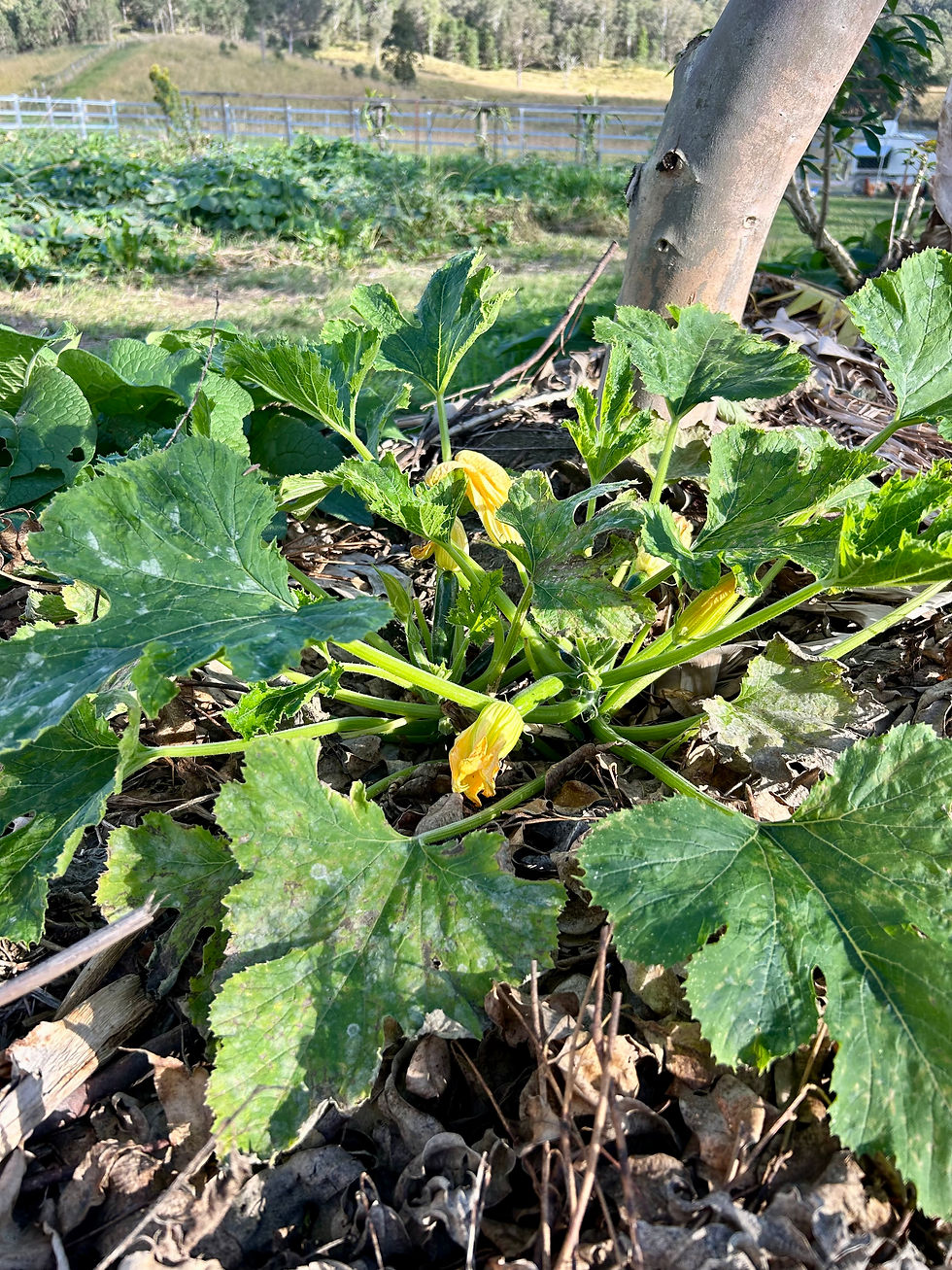
After only 2.5 years, I would be cautious about claiming significant improvements in soil structure. But we are beginning to see encouraging signs that the ground beneath our feet is changing, slowly becoming softer, better protected and, hopefully, more biologically active.
Final Thought
When we planted these trees, I expected them to change the landscape above ground. I gave very little thought to what they might be doing beneath the surface.
Today, I find myself looking at the soil just as often as I look at the trees.
Perhaps that is one of the greatest lessons companion trees have taught me. Healthy soil is not created overnight. It is built patiently through countless small processes, many of which we will never actually see. At just 2.5 years into this journey, I suspect the most exciting changes are still ahead.


Comments